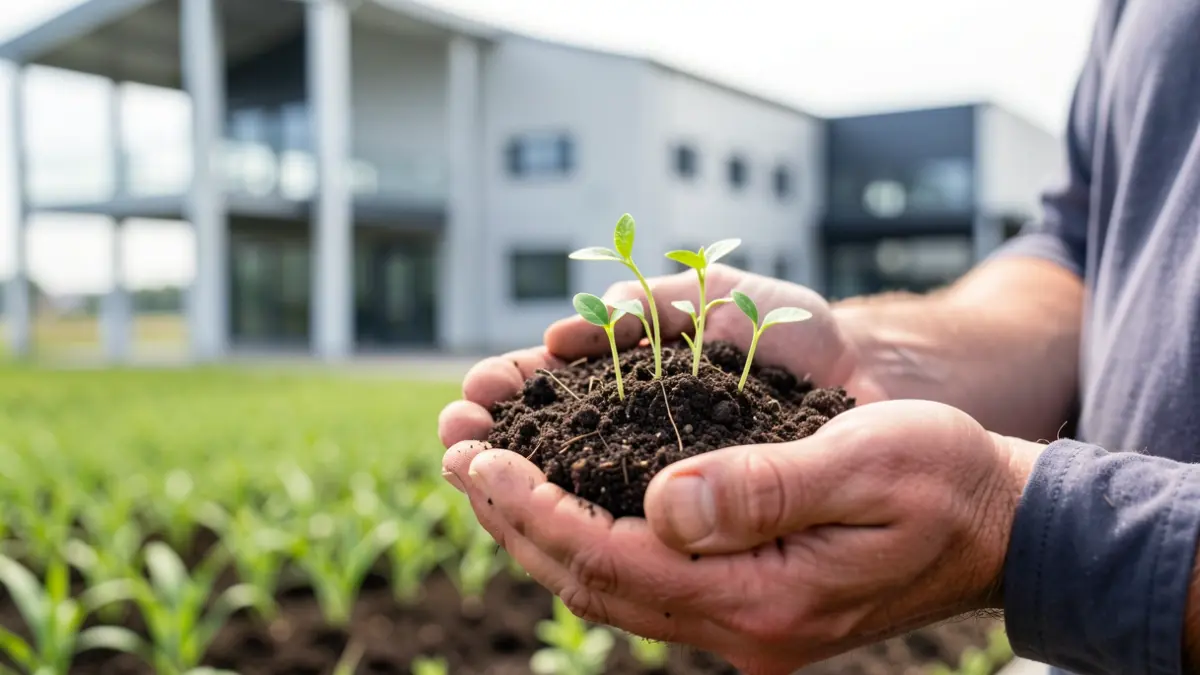
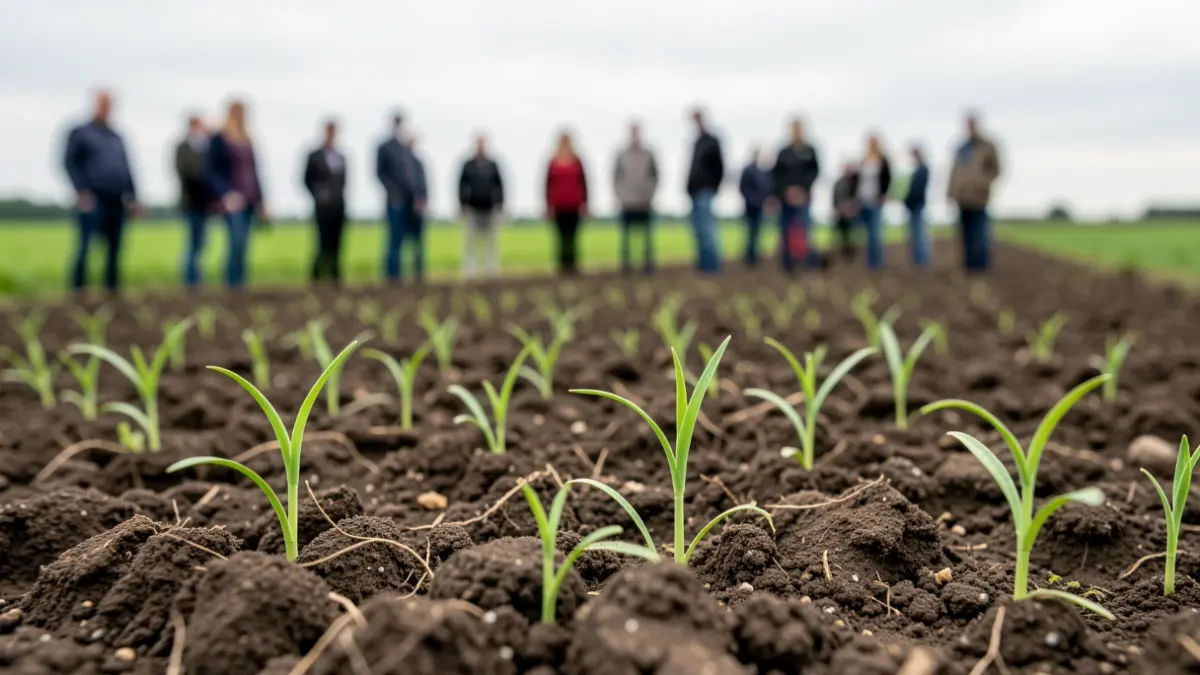
Agricultural soils release greenhouse gases such as CO2, methane (CH4), and lachgas (N2O). Although more CO2 is released than lachgas, 1 kg of lachgas warms the earth approximately 273 times more strongly than 1 kg of CO2, making lachgas an important greenhouse gas in agriculture. Besides the greenhouse effect, lachgas is also harmful to the ozone layer.
By better aligning the nitrogen demand of crops with the nitrogen supply, lachgas formation can be reduced. Precision fertilization plays a role in this, as does fractionated fertilization. Additionally, applying a portion of the nitrogen through compost instead of mineral fertilizer can reduce lachgas emissions from the soil.
The VLAIO research project LILA, led by ILVO, is further investigating measures farmers can take to limit soil emissions.
The Agency for Agriculture and Fisheries supports farmers who wish to engage in precision fertilization through the eco-scheme ‘Precision Agriculture: automatic GPS or RTK-GPS steering’. Farmers who want to apply a portion of the nitrogen demand through compost instead of mineral fertilizer can receive support via the eco-scheme ‘Increasing Organic Carbon Content’. Furthermore, there is VLIF investment support for purchasing certain machinery or materials for farm composting or precision agriculture. Farmers can also receive support for advice through the knowledge portfolio.
Farmers will soon be able to receive an additional subsidy for reducing soil emissions through the European carbon removal market.
On December 5th, World Soil Day, the agency launched a year-long campaign providing tips for healthy agricultural soil via its social media channels. All messages are also compiled under Soil Tips on their webpage www.vlaanderen.be/landbouw/bodem.