
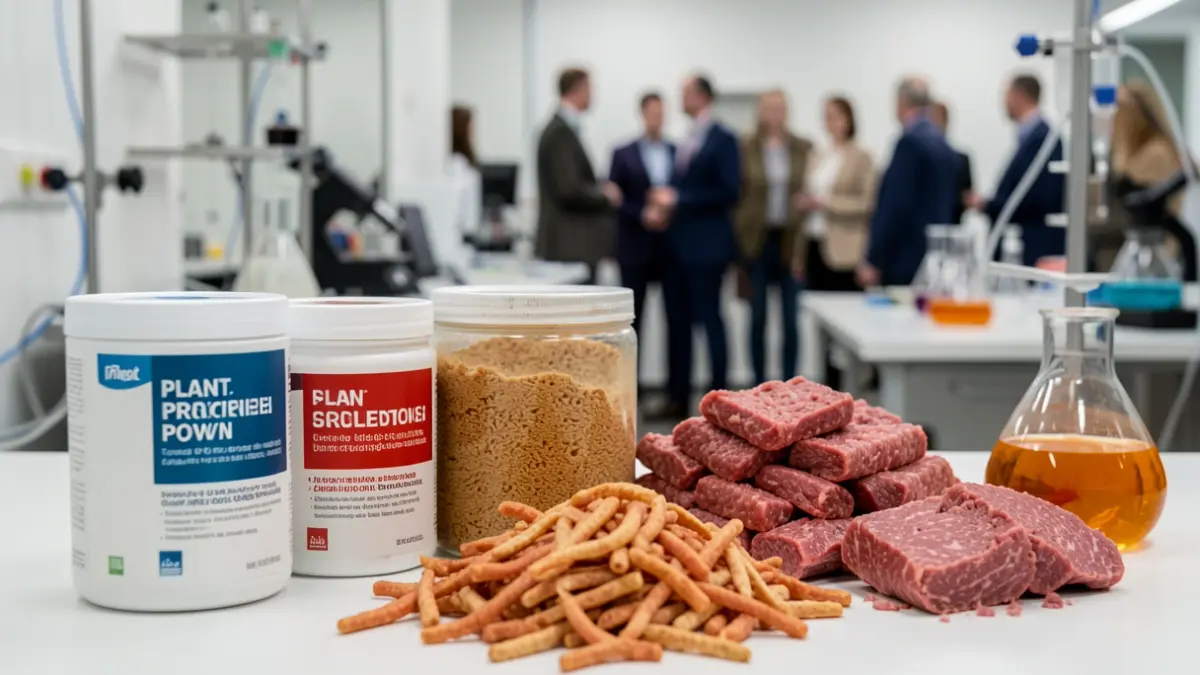
Hybrid meat products, combining meat and plant-based ingredients, are seen as a promising extension to the meat offering, targeting flexitarians. While preparation may seem simple, achieving the typical bite and coherence of classic meat products is technically challenging. Animal and plant proteins do not inherently form the networks that provide this texture, leading to a different mouthfeel for consumers.
Keshia Broucke investigated the impact of various parameters on the quality of hybrid meat products, specifically using cooked sausage made with protein powder from pea and sunflower seed. The source of the plant-based protein, the mixing percentage, additives, and the temperature used all make a significant difference. Proteins from pea (74% protein) were found to insufficiently gel and did not interact well with meat proteins, making them less suitable for high inclusion rates. At 25% pea, the texture was comparable to regular cooked sausage, but at 50% and 75% pea, a soft, spreadable texture resulted.
With sunflower seed protein (48% protein, 18% fiber), network formation was generally weaker. However, at 50% and 75% sunflower seed, the fibers in the meal formed their own network alongside the meat network. Although these fiber networks are weaker, they could compensate for some loss of firmness in certain products, such as pâté, and contribute to a higher fiber content. At lower inclusion rates (25%), the fibers seemed to hinder the network formation of meat proteins. Adding sufficient phosphate could partially counteract this by promoting the solubility of meat proteins.
The cooking temperature also influences network formation and texture. Meat proteins have a lower ideal temperature (68°C) than the tested plant proteins (>80°C). The research underscores the importance of building more knowledge about plant-based proteins and their behavior in meat matrices to determine the right protein sources, ratios, forms, and additives for specific products.
Hybrid meat products, like many meat substitutes, fall under the category of ultra-processed foods, which are currently subject to societal and scientific debate. ILVO has published a comprehensive online dossier on the various aspects and scientific insights regarding ultra-processed foods.
The doctoral research by Keshia Broucke, titled 'Effect of substitution rate, processing conditions and additives on network formation and protein quality in hybrid emulsified cooked sausages', was conducted at Ghent University and ILVO under the supervision of Stefaan De Smet (UGent) and Geert Van Royen (ILVO).