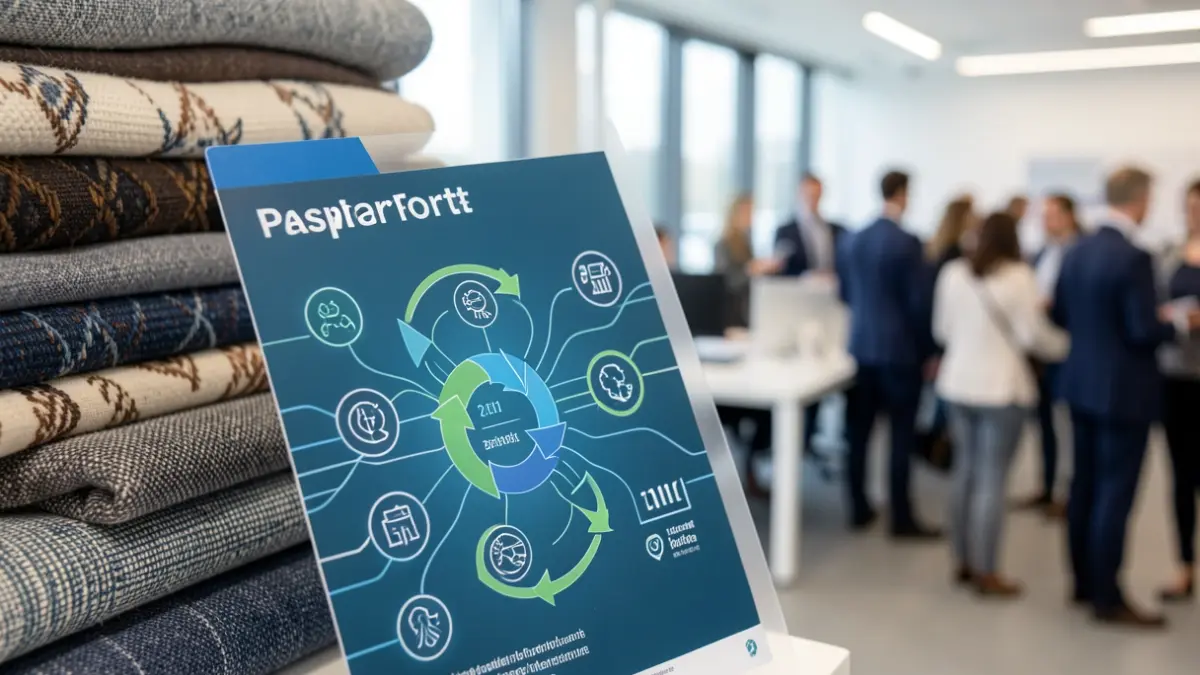
The Digital Product Passport (DPP) requires detailed information on product composition, origin, and sustainability, which is essential for the transition to a circular economy. However, a market survey reveals that many companies struggle with a lack of knowledge, uncertainty about the impact on their processes and consumer behavior, and practical challenges such as data management and system integration. To overcome these hurdles, the DPP InZicht project investigates how Flemish SMEs in the fashion and textile sector can be specifically supported in preparing for the implementation of the DPP.
This research project employs an integrated approach consisting of two pillars: broad knowledge sharing and awareness-raising on one hand, and technical implementation support on the other. Practical tools are being developed, including demonstrators, communication guides, and blueprints for data flows. These tools aim to assist companies in collecting, managing, and sharing product information, with a strong emphasis on interoperability, privacy, and security. Concurrently, workshops and other initiatives are being organized to increase awareness of the benefits of the DPP.
The expected outcomes of this practical research include a reduction in implementation costs, an increase in transparency and customer loyalty, and the introduction of new circular business models such as reuse and rental. Companies are actively supported in behavioral change and process optimization, with a focus on collaboration within the value chain. DPP InZicht accelerates the transition to a circular economy by providing companies with validated knowledge and tools. This contributes to minimizing waste, reducing environmental impact, and strengthening the competitive position of Flemish SMEs.