
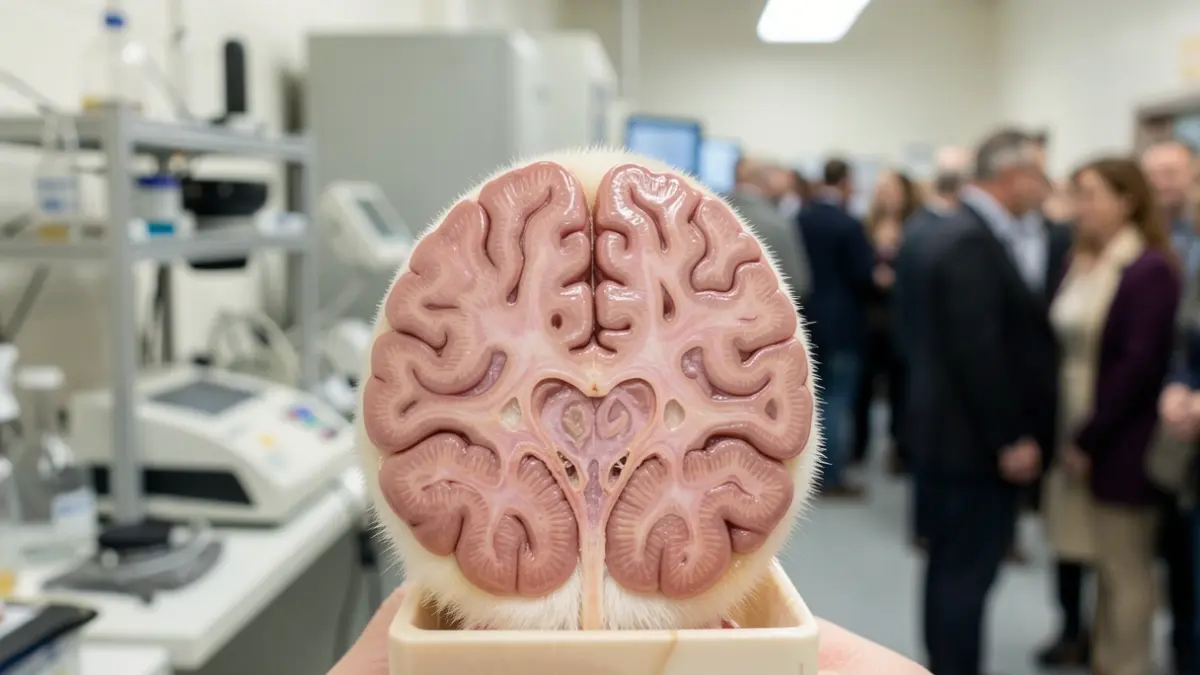
Leuven, November 12, 2026 – Scientists from VIB and KU Leuven have found clues for Alzheimer's disease in the brains of golden hamsters during hibernation. They identified changes in gene expression that resemble those associated with the accumulation of amyloid plaques, a hallmark of Alzheimer's.
The study, published in Science Advances, suggests that some early cellular changes seen in Alzheimer's may also be part of a natural adaptive response. This opens new avenues for studying the disease with the aim of developing therapies. Alzheimer's disease affects millions worldwide and is characterized by the buildup of amyloid- plaques and tangled tau proteins in the brain.
Previous research has shown that natural processes like hibernation and sleep can induce reversible changes in tau. The researchers investigated which biological processes occur in the brains of hibernating hamsters and what clues they might offer for Alzheimer's. "For the first time, we have mapped how gene activity changes across different brain cell types during the hibernation cycle," says Prof. Patrik Verstreken (VIB-KU Leuven Center for Neuroscience). "The connections between brain cells undergo structural changes alongside increased phosphorylation of tau, a protein also implicated in Alzheimer's disease."
The researchers analyzed gene expression in the hippocampus of golden hamsters at different stages of hibernation and compared it with data from people with Alzheimer's disease. A surprising discovery was that the biggest changes occurred in microglia, the brain's immune cells. These cells activated inflammatory pathways similar to those seen in Alzheimer's, suggesting that some responses we associate with disease may also be part of a normal physiological response that could help protect the brain.
Dr. Pablo Largo-Barrientos, co-first author of the study, adds: "Because the Tau protein undergoes similar changes in both Alzheimer's disease and hibernation, we wanted to find out whether the same processes might be at work. Surprisingly, although Tau is mainly found in neurons, the biggest changes during hibernation occurred in microglia. Their response closely resembled the inflammatory response previously observed in the brains of people with Alzheimer's disease."
The study also provides a valuable dataset for other researchers studying cellular changes during brain hibernation. The team now aims to understand the function of these changes and their relevance to neurodegenerative diseases. "The next step is to identify which of these pathways and cellular changes are most important, reproduce them experimentally, and investigate how they relate to what happens in the diseased brain," concludes Verstreken.