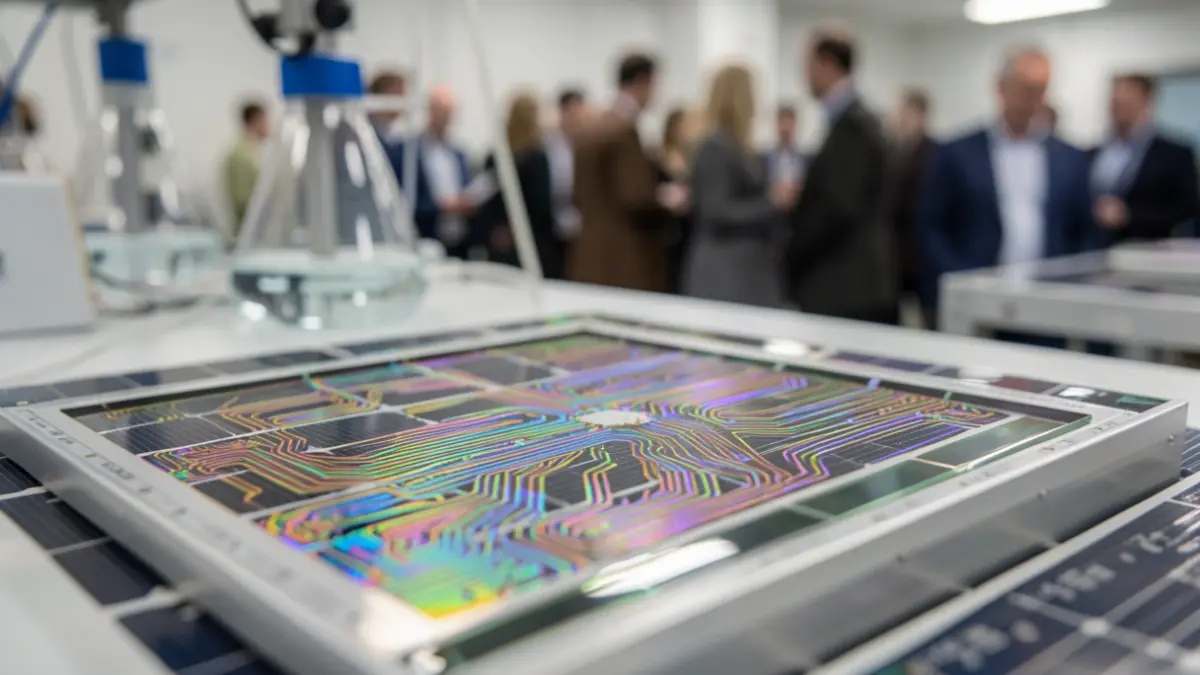
The company aims to achieve an efficiency of 35% by 2035 with its technology, which places an ultra-thin layer of perovskite on top of silicon, surpassing the current silicon cells' practical maximum efficiency of around 27-28%. This tandem cell captures a larger portion of sunlight. The technology is the result of over ten years of research by imec and UHasselt at the EnergyVille campus in Genk, where Noak is also located.
The next major challenge for Noak is scaling up production. After five years of testing at over ten outdoor locations worldwide, the company is now building an industrial pilot line. The goal is to realize gigawatt-scale factories with partners around 2030. Geert Palmers, founder of Noak, expects another funding round by 2028 and is seeking partners in countries such as Japan, India, and Canada. He emphasizes that over 90% of all current solar panels come from China and is designing cells that require fewer rare metals.
Geert Palmers is a familiar name in the Limburg ecosystem. He began his career in the early nineties at imec, researching solar cells. In 1999, he co-founded 3E, a consultancy and software company for renewable energy, which he led for twenty years and where Nuhma was also involved at the time. With Noak, he is once again supporting research from Genk aiming for industrial production.