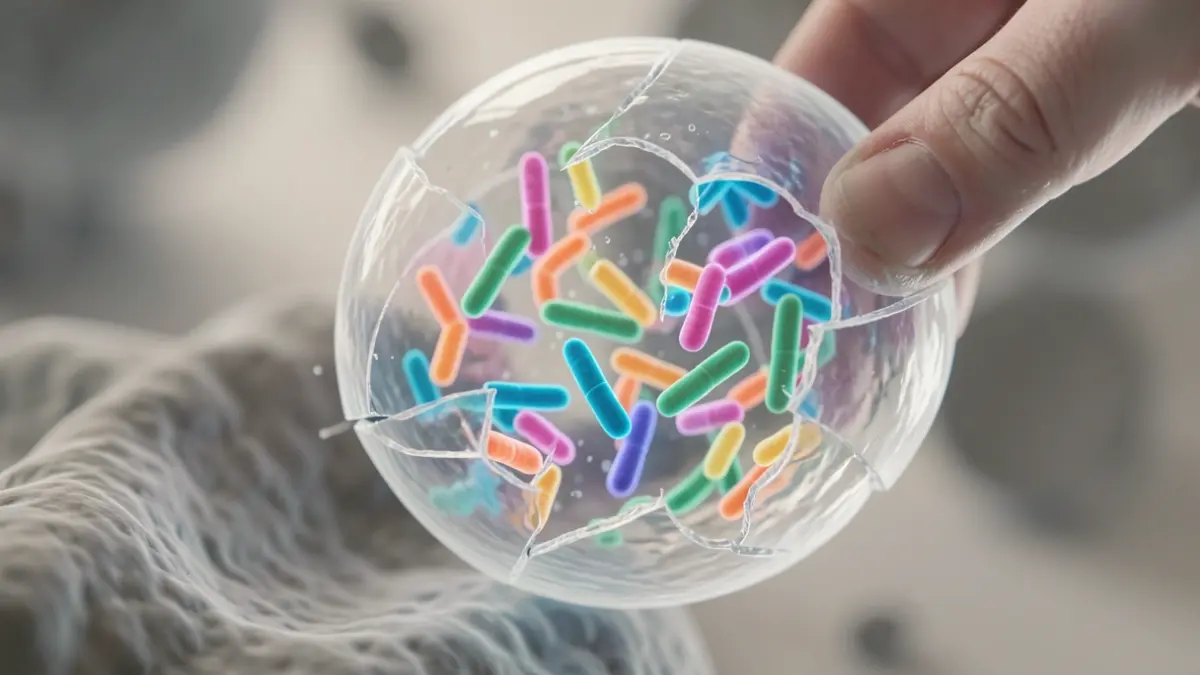
The hospital bacterium Staphylococcus aureus forms abscesses, encapsulated bacterial colonies with a protective coat made of the body's own proteins. This coat shields the bacteria from immune cells and complicates antibiotic action, particularly in infections around implants and fractures. The new FibriLysine technology, developed at the Laboratory for Genetic Technology at KU Leuven, reverses this defense mechanism against the bacterium.
The technology combines two functions in a single molecule. First, it locally breaks down the protective protein coat of the abscess, exposing the bacteria. Subsequently, an endolysin, an enzyme that degrades bacterial cell walls, destroys these bacteria in a targeted and rapid manner.
“"This research shows that the protective barrier that S. aureus creates does not have to be a strength, but can also become an Achilles' heel."
The study, recently published in Nature Microbiology, demonstrates that FibriLysines outperform standard antibiotics like vancomycin, both in laboratory tests and in a mouse model of S. aureus infection. Furthermore, FibriLysines can be administered alongside existing antibiotics, with both treatments reinforcing each other to combat stubborn infections more effectively.
This technology introduces a completely new therapeutic approach that not only attacks the bacterium but also targets the protective structure it hides within. Moreover, FibriLysines operate via a fundamentally different mechanism than classic antibiotics, enabling them to effectively combat antibiotic-resistant bacteria. This opens new perspectives for treating persistent infections and developing a new generation of anti-infective therapies, which are greatly needed.
“"Antimicrobial resistance threatens to undermine the progress of modern medicine. Without new treatments, more and more infections will become difficult or even untreatable. Therefore, innovative therapeutic approaches like FibriLysines are essential to effectively treat serious bacterial infections in the future. We are actively pursuing strategic collaborations and investments to accelerate this technology towards clinical application."